Fifteen Years of "Your Eyes Are Fine." Then I Asked a Different Question — and Got a Different Answer.
I'm 58 years old. I spent 22 years working as an air traffic controller — a profession where visual acuity isn't optional and where I had my eyes tested more frequently and rigorously than most people ever do. When I retired at 52, my vision was formally documented as excellent. I knew exactly what my eyes could do and what they couldn't.
What happened over the following six years was gradual and, by every standard clinical measure, unremarkable. My prescription barely moved. My field of vision tested normally. My optometrist said "stable" at every annual exam. And yet the subjective experience of my vision was clearly changing in ways the tests didn't capture. Eye fatigue that arrived earlier in the day and stayed longer. Night driving that had become a conscious management task rather than an automatic one. Floaters that had multiplied from occasional to persistent. Colors that seemed slightly desaturated in the way a monitor looks when its backlight is starting to fail.
The question that changed everything came from a conversation with a former colleague who had done research on what he called the "gut-eye connection." He mentioned a body of research on how harmful bacterial compounds from an imbalanced gut can cross into the bloodstream and reach the delicate vascular structures of the eye — contributing to inflammation and oxidative damage in the retina that standard vision tests don't detect until it's already meaningful. The eye looks fine on paper. The tissue is being gradually compromised at a level below the resolution of a standard checkup.
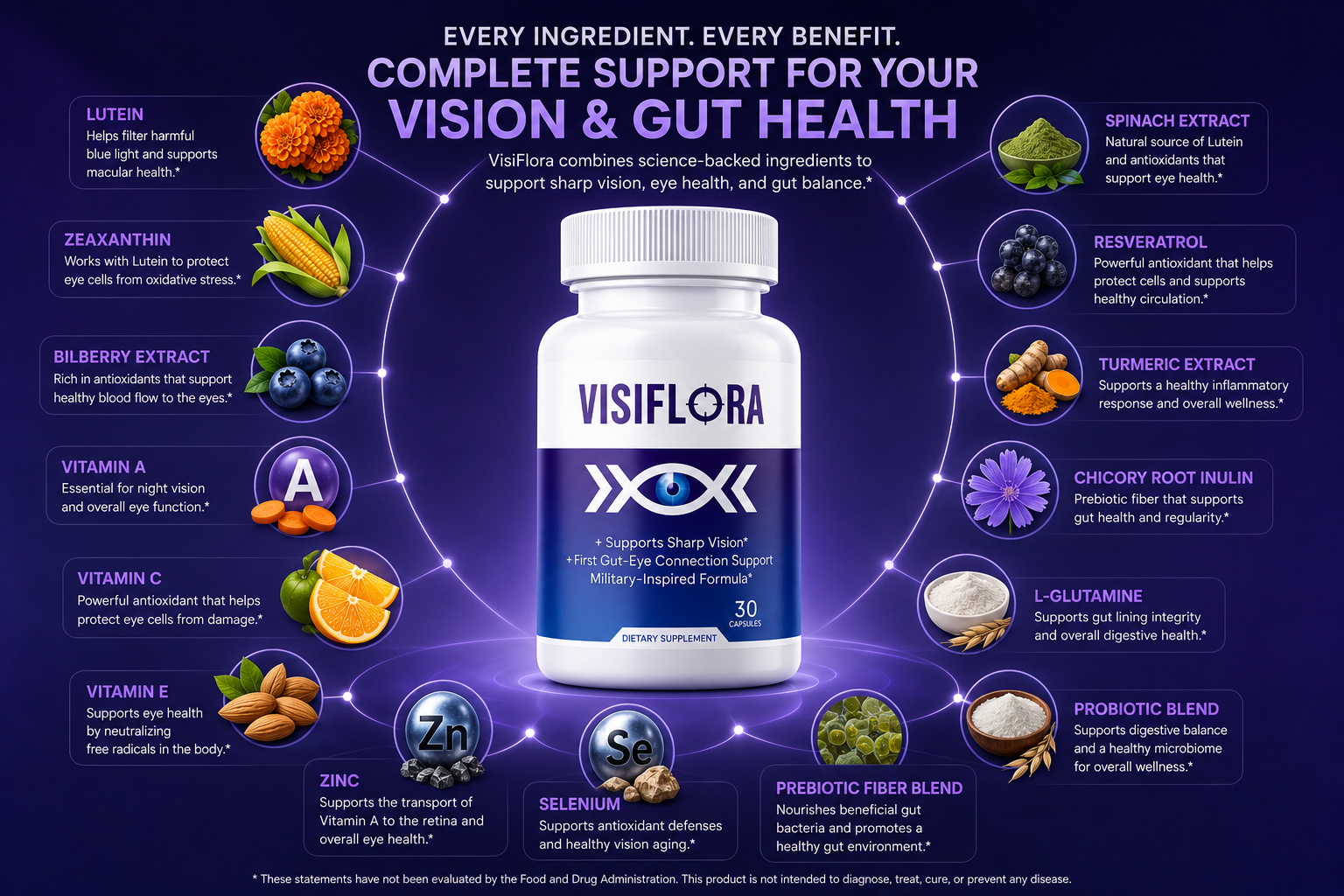
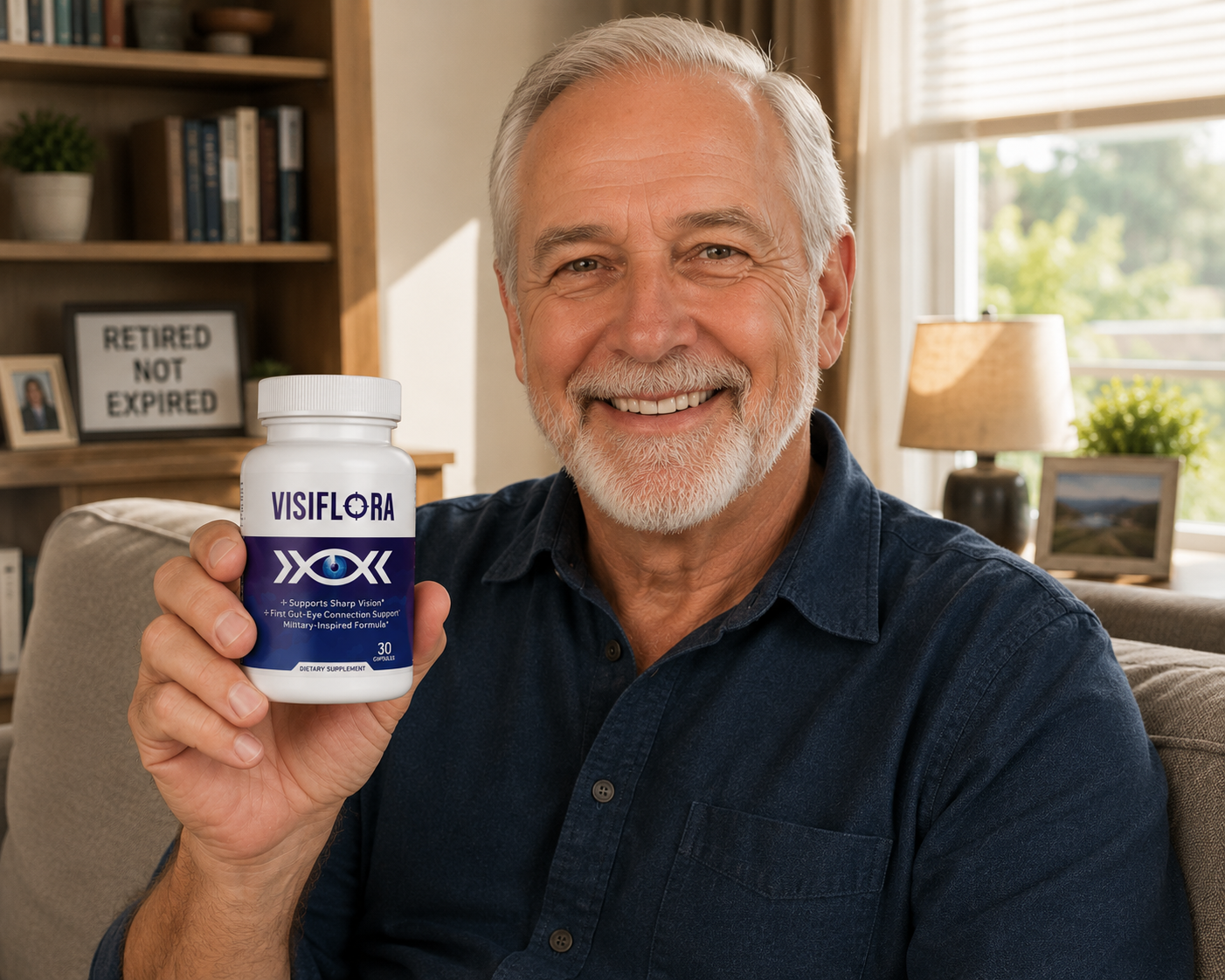
That conversation led me to VisiFlora. A 22-compound formula specifically designed to address both sides of the gut-eye connection — protective antioxidants for the retina and macula, and gut-barrier compounds to reduce the source of the underlying inflammatory challenge. I bought the 6-bottle kit with the 60-day guarantee and gave it a genuine, consistent protocol.
What happened over the following months was the most meaningful improvement in my visual experience that I'd had since my early fifties — and the first time I felt my eyes being actively supported rather than simply monitored.